Getting Vinyl Window Installation Right for Your Home
When it comes to upgrading your home's windows, the material and the method of installation matter more than most homeowners realize. Over the years, I've seen beautiful windows fail because the installation was rushed or done by someone who didn't understand how the frame and the house interact. Vinyl frames, in particular, have become a go-to choice for many homeowners in the DFW area, and for good reason. They offer strong thermal performance, resist condensation better than aluminum, and they don't need painting. But a great window in a poor installation is just an expensive disappointment. That is why understanding vinyl window installation is so important before you commit to a project.
Why Vinyl Frames Are a Smart Choice
Vinyl frames have been around for decades, but the technology has improved significantly. Modern vinyl windows are reinforced with internal chambers and sometimes with metal or fiberglass to add strength. They do not conduct heat the way metal does, which means the inside edge of the frame stays warmer in winter and cooler in summer. That reduces the chance of condensation and the mold that can follow. Manufacturers like Pella, Milgard, and Simonton have all invested heavily in vinyl frame designs, and the results show in the energy performance numbers.
Another advantage is the versatility of vinyl. It can be extruded into complex shapes that hold multiple panes of glass, weatherstripping, and hardware without adding bulk. That is why you see double-hung windows, casements, and sliders all offered in vinyl. For a whole-home replacement, sticking with one frame material simplifies the installation process and the look of your house.
What Good Vinyl Window Installation Looks Like
Proper vinyl window installation starts before the old window comes out. The rough opening needs to be square, level, and plumb. If the framing of your house has settled or shifted over time, the installer has to account for that. I once watched a crew try to force a new vinyl window into an opening that was half an inch out of square. They ended up cracking the frame, and the window never operated smoothly again. That is the kind of mistake that a careful measurement and a little shimming can prevent.

The most common method for vinyl window installation in new construction or full replacements is nail fin installation. A nail fin is a flange that extends from the frame and gets nailed or screwed into the sheathing of the house. It provides a strong mechanical connection and a surface for the weather-resistant barrier to lap over. But nail fin installation requires that the window be set from the outside, and it demands proper window flashing behind and over the fin. If the flashing tape is applied poorly, water can get behind the frame and rot the wood structure. That is not a problem with the window itself; it is a problem with the installation.
For replacement windows, where the existing frame stays in place, a block frame or insert installation is used. The new vinyl window slides into the old frame and is shimmed and screwed in place. This method is faster and less invasive, but it reduces the glass area slightly and relies on the condition of the old frame. If the old frame is rotted or out of square, an insert installation can cause more problems than it solves.
Energy Performance and the Role of Low-E Glass and Argon Gas
The frame is just one part of the energy story. The glass and the space between the panes do most of the work. Low-E glass has a microscopically thin coating that reflects infrared heat while letting visible light through. In summer, that keeps the Texas heat outside. In winter, it keeps your indoor heat from radiating out through the glass. Combining Low-E glass with an argon gas fill between the panes makes a significant difference. Argon is denser than air and moves more slowly inside the sealed unit, which reduces convective heat transfer. Together, these features can knock a noticeable amount off your heating and cooling bills.
That is where the National Fenestration Rating Council and the American Architectural Manufacturers Association come in. These organizations set the testing standards for whole-window performance. When you see an Energy Star rating on a window, it means the product has been independently tested and meets specific criteria for U-factor, solar heat gain coefficient, and air leakage. Not all Energy Star windows are equal, but the rating is a good baseline for comparison. If you are investing in a whole-home replacement, look for the NFRC label. It gives you the numbers you need to compare one window to another.
Common Mistakes to Avoid
I have seen a few recurring problems with vinyl window installation that are worth noting. The first is over-tightening the screws or nails that secure the frame. Vinyl expands and contracts with temperature more than wood or aluminum. If you lock it down too rigidly, the frame can bow or the glass can break. The manufacturer's specifications usually call for a specific screw pattern and torque. Following that pattern matters.
The second mistake is skipping the window flashing or using the wrong kind. Flashing is not optional. It is the primary defense against water intrusion. A good installer will apply a flexible, self-adhered flashing tape to the bottom and sides of the rough opening before setting the window, and then apply another layer over the nail fin after the window is in place. This creates a drainage plane that directs water to the outside.
The third mistake is not accounting for the weight of the window. Vinyl frames for double-hung windows can be heavy, especially with double or triple glazing. If the opening is not properly supported, the window can sag over time, causing the sash to stick or the seals to fail. A simple shim pack at the load-bearing points can prevent that.
When to Call a Professional
Some homeowners are comfortable doing their own window replacements, and I respect that. But vinyl window installation requires specific tools, a good understanding of building science, and the ability to work safely at heights. For a single window, the risk is manageable. For a whole-home replacement, the complexity multiplies. You are dealing with different wall constructions, possibly stucco or brick veneer, and the need to coordinate multiple openings so the windows look consistent from the street.
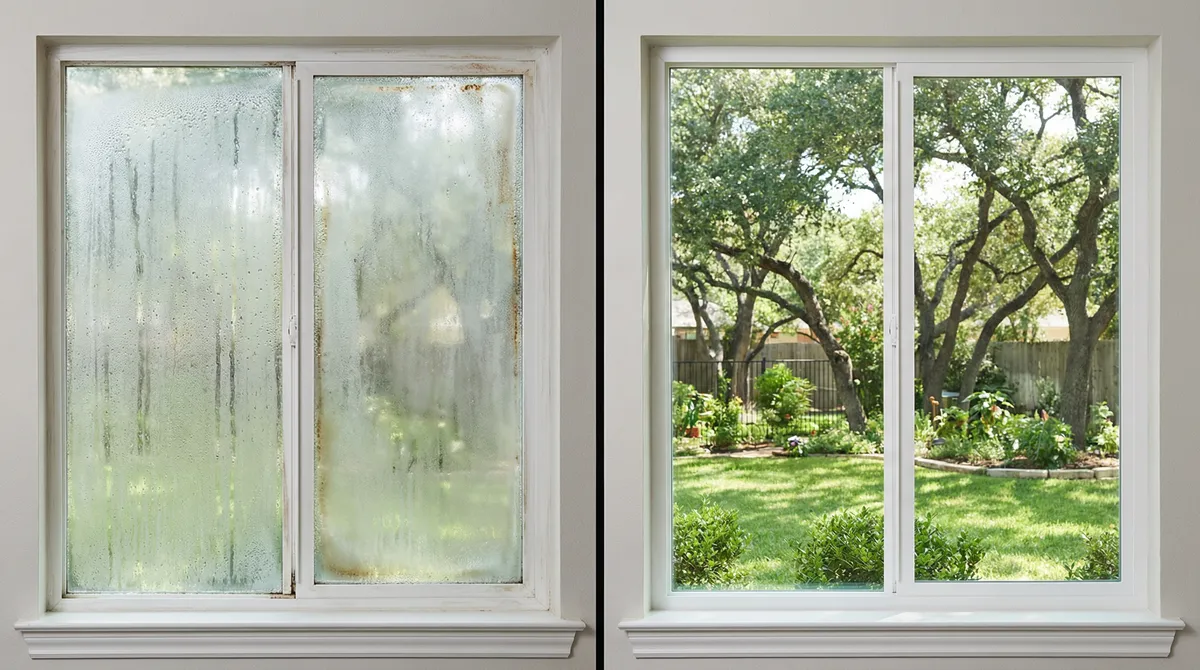
That is where a company like Apex Windows comes in. They offer free estimates and back their work with warranties. They handle foggy glass repair, commercial glass services, and whole-home replacement. If you have a double-hung window that no longer stays up, or a sealed unit that has lost its argon gas fill and now shows condensation between the panes, that is a classic case for foggy glass repair. Replacing just the glass unit can restore the window's performance without removing the whole frame. But if the frame itself is failing, a full replacement is the better path.
For commercial glass services, the stakes are higher. A storefront or office building has different requirements for fire safety, wind load, and accessibility. Vinyl frames are less common in commercial work, but the principles of proper flashing, shimming, and sealing remain the same. A professional installer will have the experience to handle those nuances.
Making the Investment Last
A properly done vinyl window installation should last twenty to thirty years with minimal maintenance. The vinyl itself does not rot or peel, but the weatherstripping and seals will eventually wear out. Keeping the tracks clean and the weep holes clear is about all the regular care that is needed. If you notice drafts or water leaks, it is usually the seal between the frame and the wall that has failed, not the window itself. That can often be fixed with new caulking or additional flashing, without replacing the whole unit.

When you are shopping for replacement windows, bring the NFRC ratings and the Energy Star criteria with you. Compare U-factors and solar heat gain coefficients for your climate zone. In the DFW area, we get hot summers and cool winters, so a mid-range U-factor and a moderate solar heat gain coefficient usually give the best balance. Low-E glass with an argon gas fill is almost always worth the upgrade. And if the installer offers a warranty on both the product and the labor, that is a sign they stand behind their work.
Vinyl window installation is not a mystery, but it is a process that rewards attention to detail. Whether you are replacing a single foggy window or doing a whole-home replacement, the same principles apply: start with a square opening, use proper flashing, do not overtighten the fasteners, and test the operation before you finish the trim. Getting it right the first time saves you money, energy, and frustration down the road.